Visit Us
Craft your experience to make the most of your visit.
Music Room
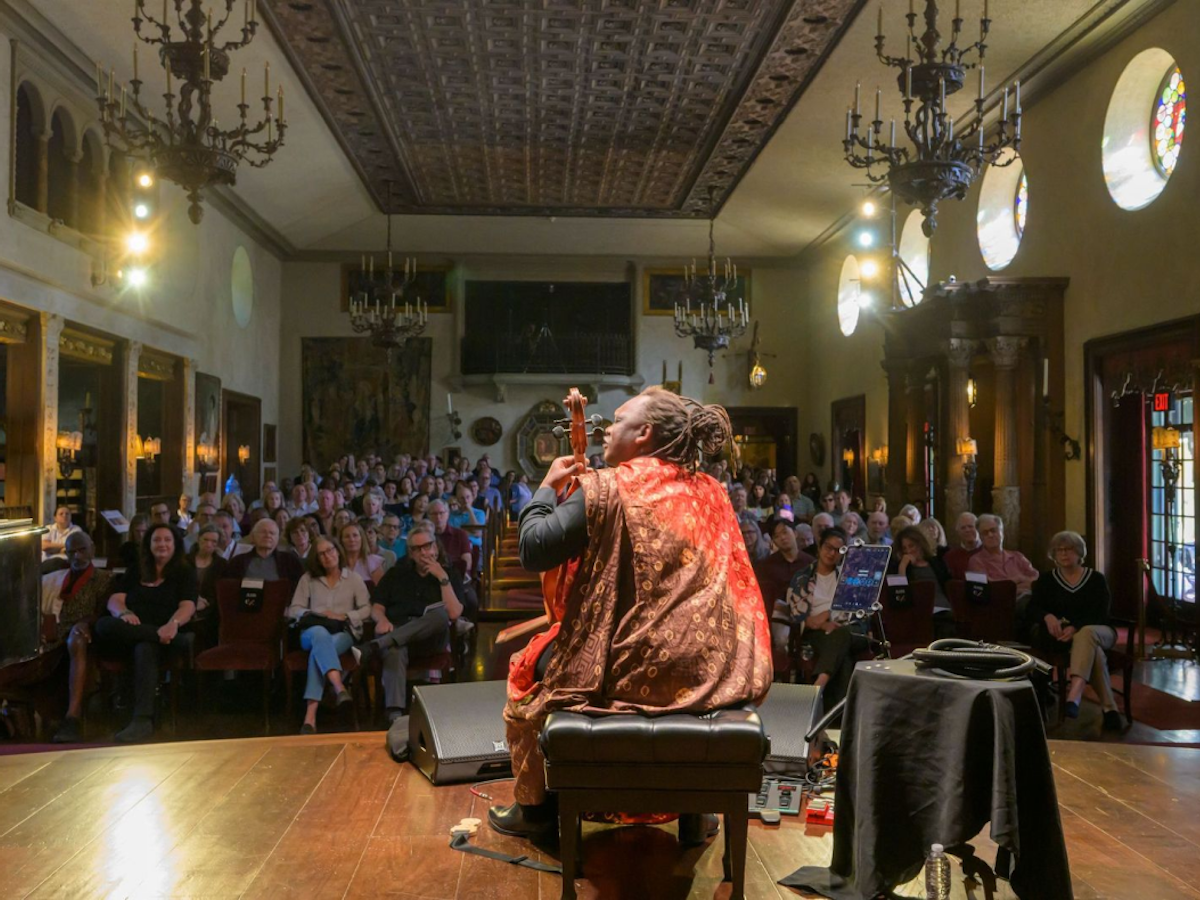
At the heart of the historic Rosen House, the Music Room is a soaring yet intimate space used for chamber music, recitals, American roots music and jazz performances, as well as lectures and Caramoor's popular Afternoon Teas. You’ll find yourself surrounded with Renaissance furniture, stained glass windows and architectural elements the Rosens collected and installed in this unique space. Only covered beverages are permitted inside during performances.
Click to view all upcoming Music Room concerts.
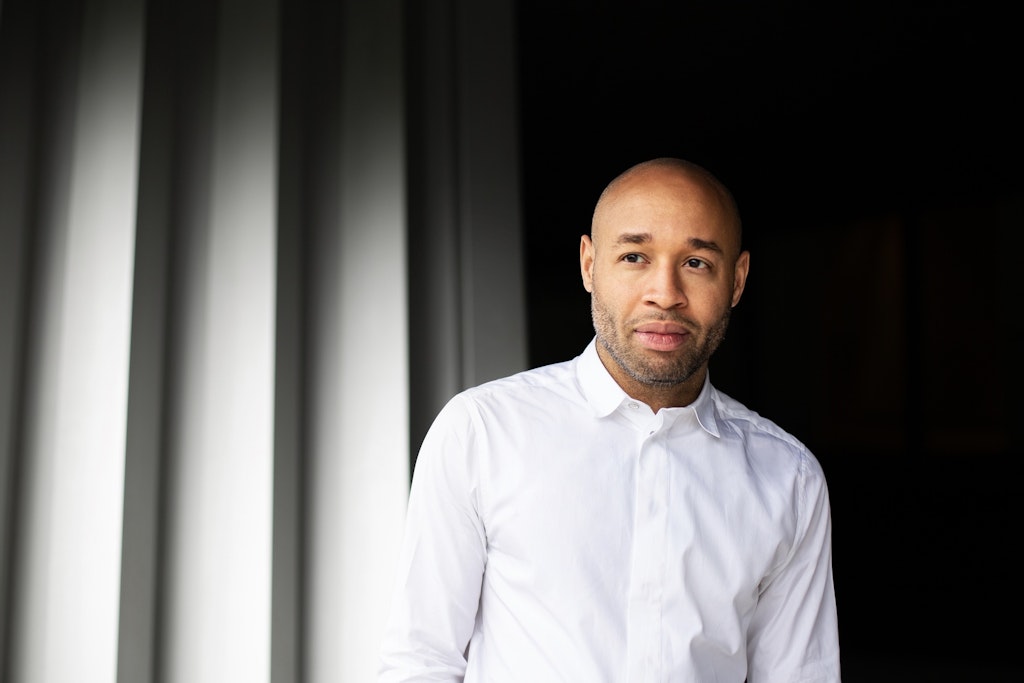
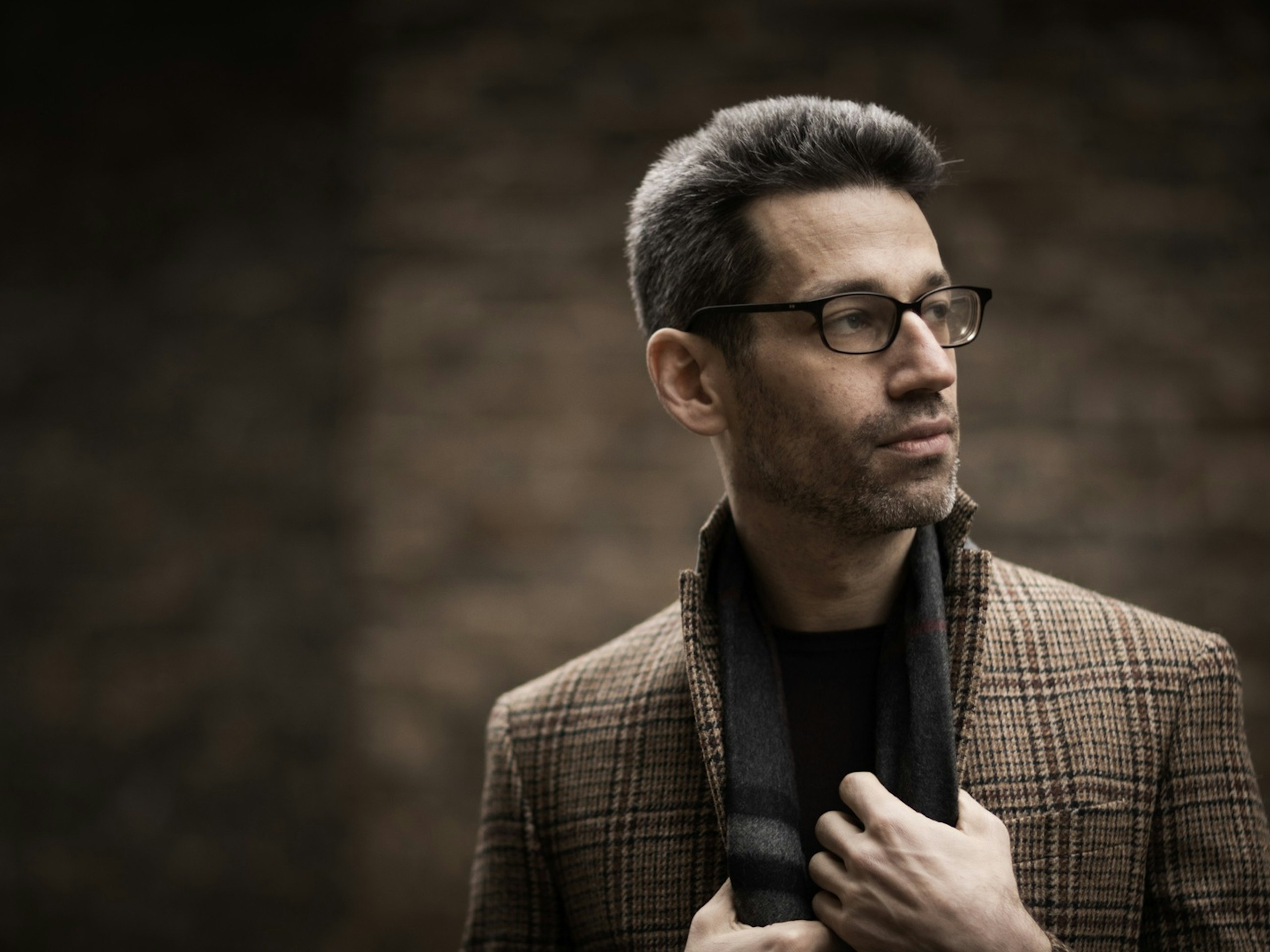
Pianist Jonathan Biss is recognized globally for his impeccable taste and formidable technique. He has appeared as a soloist with the foremost ensembles of the world, including the Los Angeles and New York Philharmonics, the Boston Symphony, and the Royal Concertgebouw. Biss is particularly renowned for his deep engagement with the music of Beethoven. He has recorded the complete piano sonatas of the composer, created a widely viewed Coursera lecture series, spearheaded the Beethoven/5 commissioning project, and is the author of the acclaimed book Unquiet: My Life with Beethoven. Beyond his extensive touring and advocacy for newly commissioned works, Biss serves as the Co-Artistic Director of the Marlboro Music School and Festival. He is a frequent contributor to The New York Times and the recipient of numerous prestigious honors, including the Leonard Bernstein Award, an Avery Fisher Career Grant, and a Gilmore Young Artist Award.
WORDS FAIL!
FELIX MENDELSSOHN: Selections from Songs without Words: A Flat Major, Op. 38 no. 6; E Major, Op. 38 no. 3; D Major, Op. 85 no. 4
LEOŠ JANÁČEK: Words Fail! from On the Overgrown Path
GYORGY KURTAG: Quiet talk with the Devil; Silence from Játékok
AMY BETH KIRSTEN: (speak to me)
SCHUMANN: Variations on an Original Theme, WoO 24;
Intermission
SCHUMANN: Fantasy in C Major, Op. 17
Pianist Jonathan Biss is recognized globally for his “impeccable taste and a formidable technique” (The New Yorker). Biss regularly appears as a soloist with some of the world’s foremost orchestras, including the Los Angeles and New York Philharmonics, the Boston Symphony, the Royal Concertgebouw, the London Symphony and more. He serves as the Co-Artistic Director of the Marlboro Music School and Festival alongside pianist Mitsuko Uchida, a role he’s held since 2018.
Throughout the 2026-27 season, Jonathan Biss appears widely in recital, chamber music, and concerto engagements across North America and Europe. Orchestral highlights include performances with the Rochester Philharmonic Orchestra under Andreas Delfs,, the Knoxville Symphony Orchestra with Aram Demirjian, the Bournemouth Symphony Orchestra under Andrew Litton, Turkey’s Bilkent Symphony Orchestra led by Kirill Karabits, Royal Northern Sinfonia under Dinis Sousa, the National Symphony Orchestra of Ireland under Peter Whelan, and the Martinů Philharmonic Orchestra with Robert Kruzik.
Recital engagements include Tippet Rise Art Center, Caramoor Center for Music and the Arts, Chamber Music Pittsburgh, Chamber Music Sedona, People’s Symphony Concerts, Lunenburg Academy of Music Performance, a residency at the Colburn School, Piano aux Jacobins in Toulouse and the Steinway International Piano Series in Cardiff.
Biss concludes his traversal of Mozart’s violin sonatas with violinist Mark Steinberg at the Philadelphia Chamber Music Society and Wigmore Hall as well as an appearance at Vancouver’s Music in the Morning. He will also perform at Wigmore for a recital with mezzo-soprano Ema Nikolovska and as part of a tour with tenor Mark Padmore that will include programs for the Royal Birmingham Conservatoire, Mogens Dahl Concert hall (Copenhagen), and Cologne Philharmonie.
Praised by The Boston Globe as “an eloquent and insightful music writer,” Biss published his fourth book, Unquiet: My Life with Beethoven, in 2020. The book in which he examines music and his own life’s journey through the lens of Beethoven’s last piano sonatas was the first Audible Original by a classical musician and one of Audible’s top audiobooks of the year. Biss is also an ongoing contributor of opinion pieces to The New York Times, with topics ranging from the harmful myth of the mad artist to finding solace in Schubert’s final piano sonatas and beyond.
He served on the faculty of the Curtis Institute of Music for ten years, and has been a guest professor at schools such as the Guildhall SOMAD and the New England Conservatory of Music.
In 2015, Biss embarked on a groundbreaking journey with the Saint Paul Chamber Orchestra through the Beethoven/5 commissioning project, which brought together five distinguished composers to create new piano concerti in response to Beethoven’s iconic works. The project has generated a series of recordings on Orchid Classics, beginning with 2024’s recording of Beethoven’s Fifth Piano Concerto, the “Emperor,” paired with Brett Dean’s Gneixendorfermusik: Eine Winterreise, performed with the Swedish Radio Symphony under David Afkham. The series also features Sally Beamish’s City Stanzas alongside Beethoven’s First Piano Concerto, with additional volumes showcasing new concerti by Timo Andres and Salvatore Sciarrino. The project reached its conclusion in April 2026 with the release of its fifth and final volume, pairing Beethoven’s Third Piano Concerto with Caroline Shaw’s Watermark, performed with the Swedish Radio Symphony Orchestra and Malin Broman. Named an Editor’s Choice by both Gramophone and Limelight, the recording brings the decade-long project to a close.
An advocate of newly-commissioned works, Biss most recently collaborated with composers Alvin Singleton, Tyshawn Sorey, and Tyson Gholston Davis for his Schubert commissioning project, which he presented at the Frederic Chopin Society in St. Paul, Philadelphia Chamber Music Society, the Meany Center in Washington, and more. His recording of these works for Orchid Classics will be released in fall 2026.
Coinciding with the 250th anniversary of Beethoven’s birth in 2020, Biss recorded the composer’s complete piano sonatas, and offered insights to all 32 landmark works via his free, online Coursera lecture series Exploring Beethoven’s Piano Sonatas. In March 2020, Biss gave a virtual recital presented by 92NY, wherein he performed Beethoven’s last three piano sonatas for an online audience of more than 280,000 people. In 2024, Biss participated in Princeton University Concert’s Healing Through Music Series, appearing alongside author Adam Haslett for a panel discussion on anxiety, depression, and creativity.
Biss is the recipient of numerous honors, including the Leonard Bernstein Award, the Andrew Wolf Memorial Chamber Music Award, an Avery Fisher Career Grant, the Borletti-Buitoni Trust Award, and a Gilmore Young Artist Award. His albums for EMI won the Diapason d’Or de l’Année and Edison awards. He was an artist-in-residence on American Public Media’s Performance Today and was the first American chosen to participate in the BBC’s New Generation Artist scheme.
Biss is a third-generation professional musician; his grandmother is Raya Garbousova, one of the first famous female cellists (for whom Samuel Barber composed his Cello Concerto), and his parents are violinist Miriam Fried and violist/violinist Paul Biss. Growing up surrounded by music, Biss began his piano studies at age six, with his first musical collaborations alongside his mother and father. He studied with Evelyne Brancart at Indiana University and Leon Fleisher at the Curtis Institute of Music.
By the time Felix Mendelssohn was born, in 1809, domestic music making was reaching a zenith in Europe. Sales of pianos boomed thanks to a surplus of highly skilled makers. This led to an increased demand for private lessons, as well as a market for printed music that advanced amateurs could play at home. A target demographic were young women, since fashionable society viewed mastery at the keyboard suitable for their development into sophisticated adults. We see glimpses of this in the literature of the time, as when Jane Austen writes about the excitement of a Broadwood piano being gifted in her novel from 1815, Emma.
Mendelssohn wrote the first of his Songs Without Words in 1829 and continued to write them throughout the rest of his short life, publishing them in sets of six. The name refers to the strong melodies foregrounded in the works, which sound like someone is singing. Some of them were dedicated to specific female friends and family, like Mendelssohn’s sister Fanny, and Clara Schumann. The woman at the heart of the Op. 38 set was Mendelssohn’s new wife, Cécile, as the works in this set were written during their courtship and marriage. No. 3 in E Major flows with rapturous strumming, as if accompanied by a harp, while No. 6 in A-flat Major is nicknamed “duet,” for the way it sounds like two voices singing together.
In early November 1847, Mendelssohn died of a stroke at just thirty-eight years old. The final two books of his Songs Without Words were not published until after his death. Among them is Op. 85, No. 4 in D Major, which is tinged with melancholy and expressive longing.
Many years before joining Bedřich Smetana and Antonín Dvořák as one of the three most renowned Czech composers in history, Leoš Janáček was an eleven-year-old being taken by his parents nearly a hundred miles from his hometown of Hukvaldy to live at the Augustinian Abbey in Brno. He had been accepted there as a choral scholar to receive both a solid academic education and musical training (and relieve some financial strain off his large family). Coming from a family of teachers, Janáček eventually followed the same path at age eighteen. Soon after, he embarked on a life and career that was continuously divided between teaching and music making. Ultimately, he would return to Brno, where he made an indelible contribution to the cultural life of the town, and experienced fame as a composer later in life.
Janáček began writing the first five pieces that would become On the Overgrown Path in 1901, as a musical autobiography of his childhood at home, before moving to the abbey. Then his twenty-one-year-old daughter, Olga, got sick with typhoid fever in 1902 and died the following year — his last living child, since their son had died many years earlier while still a toddler. It was not until 1908 that Janáček returned to On the Overgrown Path and added five more pieces, using it as a way to help process the grief of how the trajectory of his family life had changed. Among the new additions was Words Fail!, which features bell-like tolls interspersed with a wistful melodic theme.
Since 1973, the Hungarian composer Gyorgy Kurtág has been writing hundreds of miniature works that range anywhere from mere seconds to a few minutes in length. Periodically, a group of them are gathered together and published, adding to the multivolume series called Játékok, or “games.”
Kurtág began writing these pieces as his contribution to pedagogical music. He was frustrated with the traditional works available for music students, which he felt overly emphasized rote acquisition of skills and mechanical repetition with a goal of perfection. Instead, Kurtág wanted to cultivate curiosity, and help students view music as an arena for expressive and playful exploration. Játékok would require, as Kurtág said, “a great deal of freedom and initiative from the performer.”
Quiet Talk with the Devil and Silence both come from Book Three of Játékok, which was published in 1979. At less than 90 seconds, Quiet Talk with the Devil succinctly conveys a breathtakingly suspenseful dialogue. It is full of outbursts and quietly expressed fragments of melody that trail off into the void. Silence is a brief homage to Kurtág’s fellow Hungarian composer Endre Szervánszky, and is warmly expressive despite its economy of notes. There is an inherent musicality to speech, with its rising and falling pitches and syllables peppering sentences with rhythms. Poetry taps into this capability, and the American composer Amy Beth Kirsten takes it further as a piece of theater between performer and instrument with (speak to me), a remarkably imaginative telling of the myth of Echo and Narcissus.
In mythology, Echo was a charming chatterbox who used conversation as a way to distract the goddess Juno while her husband Jupiter was pursuing his many affairs. We hear this in the first movement, Deceit, with the bewildering flurry of words uttered by the performer, often disintegrating into gibberish. The second movement, Curse, depicts Juno’s revenge, when she takes away Echo’s power to say anything other than the last words spoken to her. We hear both characters, Juno in deep, authoritative tones as her words are repeated by a distraught, breathless Echo. In the third movement, Longing, we hear only the piano. Echo sees the object of her affection, the handsome Narcissus, but she can only yearn for him, unable to call out freely and be heard.
In 1835, Robert Schumann found himself in love with Clara Wieck, a famous young concert pianist — and the daughter of his piano teacher. They fell deeply in love, but Clara’s father, Friedrich, opposed their relationship, forcing the couple into a period of separation the following year. During their time apart, Schumann began composing the Fantasy in C Major, Op. 17, embedding within it messages of love that Clara would understand. At the top of the score are lines by the poet Friedrich von Schlegel: “Among all the sounds in the earth’s many colored dream/One soft note calls to the secret listener.” Then, at the end of the tender first movement, a musical quotation of Beethoven’s song cycle To the Distant Beloved has been inserted, specifically where the lyrics say, “Take them, these songs that I sang to you.”
Schumann later decided to expand the Op. 17 into three movements. He hoped to contribute it toward an effort, spearheaded in part by Franz Liszt, to raise funds for a monument to Beethoven in his hometown of Bonn, in time for what would have been his seventy-fifth birthday (he had died in 1827). The second movement has a generous and vigorous spirit, while the finale sustains a quiet yet fervent atmosphere.
Robert and Clara finally married in 1840, growing together as musicians and expanding their family with eight children. In 1850 they moved from Dresden to Düsseldorf when the position of Municipal Director of Music was offered to Robert. It was a difficult transition, complicated by the ongoing mental and physical health challenges with which he contended. Things reached a breaking point on the night of February 27, 1854, when Robert left the house and plunged himself into the icy Rhine River. After being rescued, he was placed in sanatorium in Bonn, where he died three years later.
The music Robert was working on before walking out the door toward the river was the Variations on an Original Theme, published in 1939 as the “Ghost Variations,” because of his belief that the melody had been communicated to him by an angelic chorus; interestingly, a similar theme is heard in the slow movement of his 1853 violin concerto. It was the final composition of his life, a work that speaks to us of his yearning, reaching, and striving toward transforming complexity into astounding beauty, and releasing tension into easeful peace.
— Kathryn Bacasmot
by Jonathan Biss
The power of music begins where the utility of language ends. Music cannot give practical information — it will not tell you if it is raining, or that you need to fill the car, or that you have run out of Cheerios — but it has a spectacular capacity for communicating the things that we cannot, or dare not, say with words. It can give voice to feelings that otherwise remain silent and, even more remarkably, put us in touch with feelings we did not know we had.
The works on this program are not only examples of this phenomenon; in many cases, the limitations, even impotence, of speech are their subject. This is made explicit in Mendelssohn, Janáček, and Kurtág’s choices of titles, but Kirsten and Schumann go deeper. In (speak to me), a riotous spokenword retelling of the Narcissus and Echo myth, language is often deceptive and unintelligible; the music is where the profundity lies. In Schumann’s “Ghost” Variations, dedicated to his beloved Clara and written in their last days together, an almost unbearable intimacy — one far beyond the reach of language — is expressed. And in his magnificent Fantasy, whose epitaph evokes “those who listen in secret,” one of the climactic moments arrives when Schumann quotes Beethoven’s song cycle An die ferne Geliebte (“To the Distant Beloved”). The words Beethoven set go unspoken; in their absence, Schumann creates an emotional world they could barely hint at.
Craft your experience to make the most of your visit.
Your support brings performances to life, preserves Caramoor’s historic legacy, and nurtures the artists of tomorrow. Every gift matters—and makes you part of the Caramoor family.